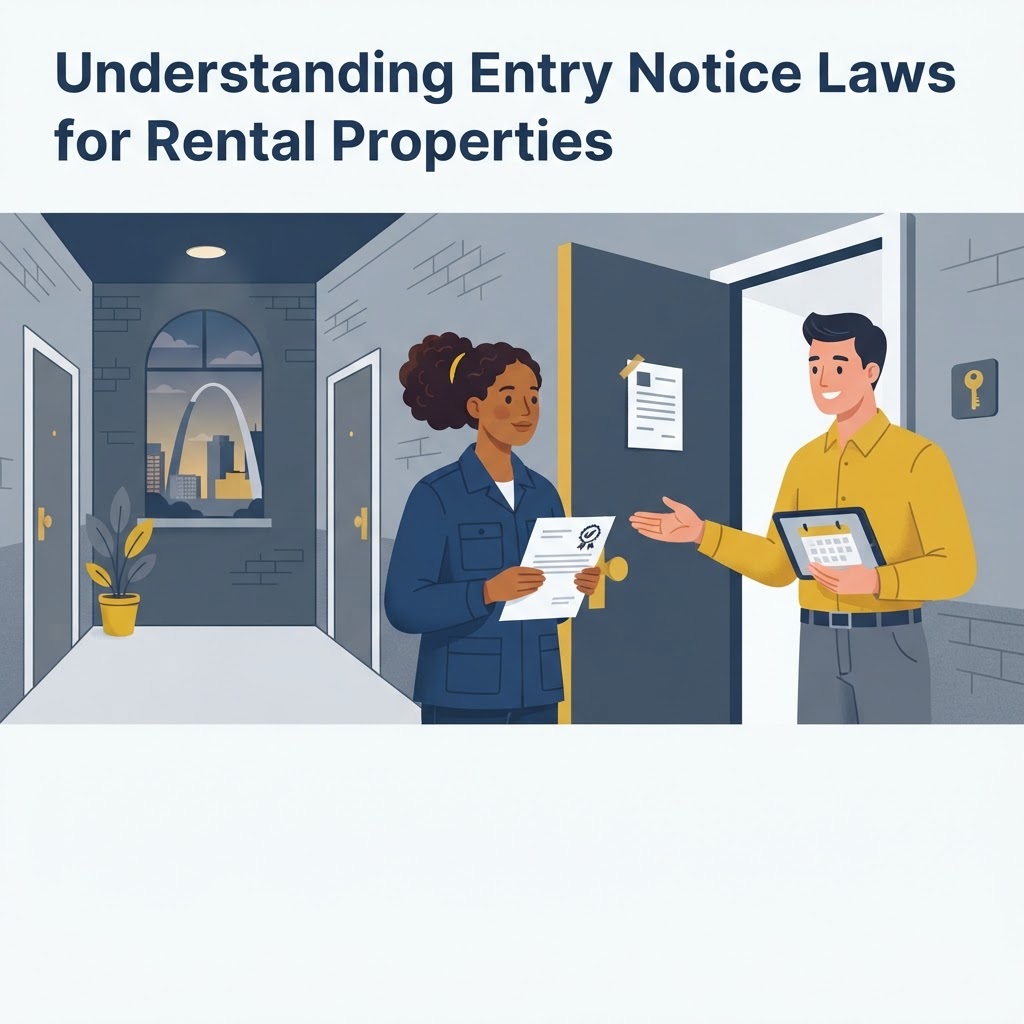
Navigating the intricacies of landlord-tenant relationships is crucial for maintaining a harmonious rental property environment. One of the key aspects of this relationship is understanding entry notice laws. These laws dictate when and how a landlord can enter a tenant's unit, ensuring respect for tenant privacy while allowing landlords to fulfill their maintenance and inspection duties.
Understanding Entry Notice Laws
Entry notice laws vary by state and even by city, and St. Louis is no exception. In Missouri, landlords must provide reasonable notice before entering a tenant's property. While the law does not specify the exact amount of time that constitutes 'reasonable notice,' it is generally interpreted as at least 24 hours. The notice should clearly state the reason for entry and the approximate time and date.
For landlords, it's essential to understand that these laws aim to balance the right to privacy for tenants with the landlord's need to manage their property. Failing to adhere to these laws can result in legal consequences, including potential claims of invasion of privacy or harassment.
When Can a Landlord Enter?
Understanding when entry is permissible is critical. Generally, landlords are allowed to enter rental units for several reasons:
- Repairs and Maintenance: Entry for repairs or maintenance is one of the most common reasons. This includes both routine maintenance and unexpected repairs, such as fixing a leaking pipe.
- Inspections: Periodic inspections to ensure the property is in good condition are allowed, but these should be scheduled and communicated in advance.
- Showing the Property: If a tenant has given notice to vacate, landlords may need to show the unit to prospective tenants. This should be arranged at a mutually convenient time.
- Emergencies: In cases of emergency, such as a fire or severe water leak, landlords can enter the property without notice.
Tenant Rights and Responsibilities
Tenants also have rights and responsibilities when it comes to entry notice laws. Understanding these can prevent potential conflicts:
- Right to Privacy: Tenants have a fundamental right to privacy in their homes. They are entitled to expect that landlords will respect this right.
- Responsibility to Cooperate: Tenants should cooperate with landlords by allowing reasonable access for legitimate reasons. Refusing access for necessary repairs or inspections can lead to complications.
In St. Louis, maintaining good communication is key. Tenants should be informed of upcoming entries well in advance, allowing them to prepare for the visit. This not only respects their privacy but also helps in building a positive relationship.
Best Practices for Landlords
For landlords, adhering to entry notice laws is about more than just compliance; it's about fostering trust and respect with tenants. Here are some best practices:
- Provide Written Notice: Always provide written notice, even if the law does not specifically require it. This can be a physical letter or an email, as long as it's documented.
- Specify Details: Include the date, time, and purpose of the entry in the notice. This clarity helps to manage tenant expectations.
- Respect Tenant Schedules: Whenever possible, try to schedule entries at times convenient for the tenant. This might mean offering several time slots for them to choose from.
- Document Everything: Keep a record of all notices and communications with tenants regarding entry. This documentation can be invaluable in case of disputes.
Legal Implications of Non-Compliance
Failing to comply with entry notice laws can have serious legal implications. Tenants may have grounds to terminate the lease, withhold rent, or even sue for invasion of privacy. For landlords, understanding these stakes is vital.
Missouri law does not explicitly outline penalties for non-compliance, but tenants can seek remedies through civil actions. Moreover, a pattern of disregard for tenant privacy can harm a landlord's reputation, impacting their ability to attract and retain tenants.
Conclusion
Understanding and adhering to entry notice laws is a fundamental aspect of responsible property management. For landlords in St. Louis, this means balancing their property management duties with tenants' rights to privacy. By providing clear communication and respecting tenants' schedules, landlords can maintain a positive relationship with their tenants.
If you're a landlord navigating the complexities of entry notice laws, consider partnering with STL Property Managers. Our expertise in local regulations ensures that your property management practices are not only compliant but also tenant-friendly, fostering a harmonious living environment. For more information on tenant rights and responsibilities, visit the Missouri Attorney General's website.