
Understanding Cash Flow vs Appreciation in Real Estate
Explore the differences between cash flow and appreciation in real estate investing. Learn how to balance both for optimal portfolio growth.
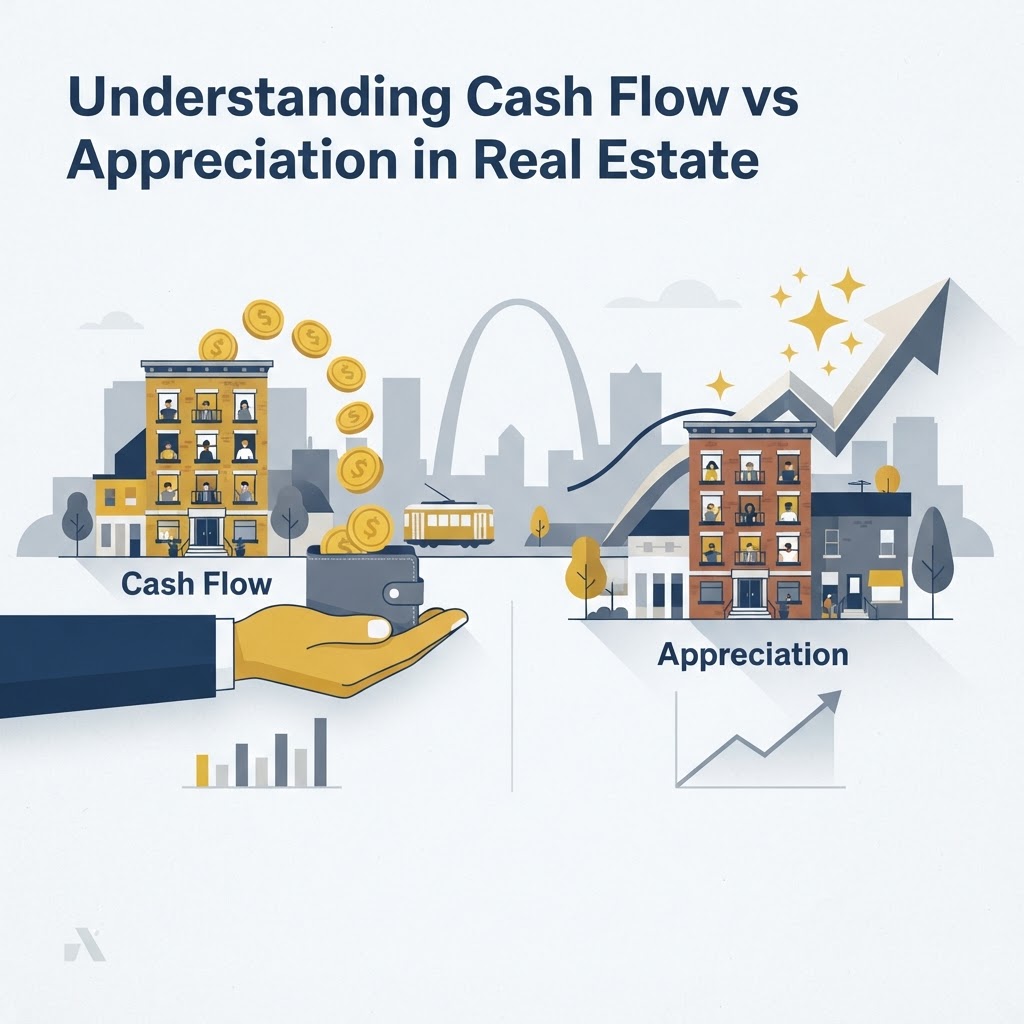
When investing in real estate, property owners often grapple with the concepts of cash flow and appreciation. These two financial indicators play crucial roles in determining the profitability and long-term value of investments. Understanding how each one works can help investors make informed decisions, particularly in vibrant markets like St. Louis and St. Charles, Missouri. ## The Basics of Cash Flow in Real Estate Cash flow refers to the net amount of money being transferred into and out of your investment. In real estate, it is the difference between the rental income you receive and the expenses you incur. These expenses include mortgage payments, property taxes, insurance, maintenance costs, and property management fees. ### Positive vs Negative Cash Flow - Positive Cash Flow: This occurs when the income generated from a property exceeds the expenses. Properties with positive cash flow provide investors with regular income, which can be reinvested or used to cover other financial obligations.
- Negative Cash Flow: Here, the expenses surpass the income, resulting in a loss. While initially concerning, negative cash flow can sometimes be offset by future appreciation or tax benefits. ## The Role of Appreciation Appreciation is the increase in the value of a property over time. It can be influenced by factors such as market demand, economic inflation, and improvements made to the property. Unlike cash flow, appreciation is not realized until the property is sold. ### Types of Appreciation - Natural Appreciation: Driven by the market, natural appreciation occurs as a result of increased demand or limited supply. This is common in growing areas like St. Louis, where economic development and population growth are prevalent.
- Forced Appreciation: This results from intentional improvements made to the property, such as renovations or upgrades, which increase its market value. ## Balancing Cash Flow and Appreciation Investors often face a dilemma when deciding whether to focus on properties offering strong cash flow or those with significant appreciation potential. Each strategy has its pros and cons, and the right choice largely depends on your financial goals and risk tolerance. ### Considerations for Investors - Investment Goals: Short-term investors might prioritize cash flow to ensure immediate returns, while long-term investors might focus on appreciation for substantial future gains.
- Risk Assessment: Cash flow properties often provide steady returns with lower risk, whereas appreciation-focused investments might involve greater risk due to market fluctuations.
- Market Conditions: In a market like St. Louis, where property values are steadily rising, a balanced approach that considers both cash flow and appreciation can be particularly effective. ## Practical Tips for Investors 1. Conduct Thorough Market Research: Understand the local real estate market, focusing on trends that could impact both cash flow and appreciation.
- Evaluate Property Location: Properties in desirable neighborhoods often appreciate faster and attract reliable tenants, improving both cash flow and resale value.
- Analyze Financial Metrics: Use metrics like cap rate and cash-on-cash return to evaluate the potential profitability of an investment.
- Consider Professional Management: Hiring a property management company can optimize rental income and manage expenses effectively, enhancing cash flow. ## Conclusion Balancing cash flow and appreciation is a nuanced aspect of real estate investing that requires a strategic approach. By understanding these concepts and considering market conditions in areas like St. Louis and St. Charles, investors can make informed decisions that align with their financial goals. For personalized guidance and a free rental analysis, consider reaching out to AMOSO Properties at https://amosoproperties.com or (314) 332-3116.
Related Reading
- The Ultimate Guide to Rental Property Investment in St. Louis, Missouri
- Identify Key Factors of a Profitable Property Investment
- How to Find Your First Rental Property in St. Louis
If you would rather hand off the day-to-day, AMOSO Properties manages rental homes across Greater St. Louis and St. Charles. See request a free rental analysis or call (314) 332-3116.