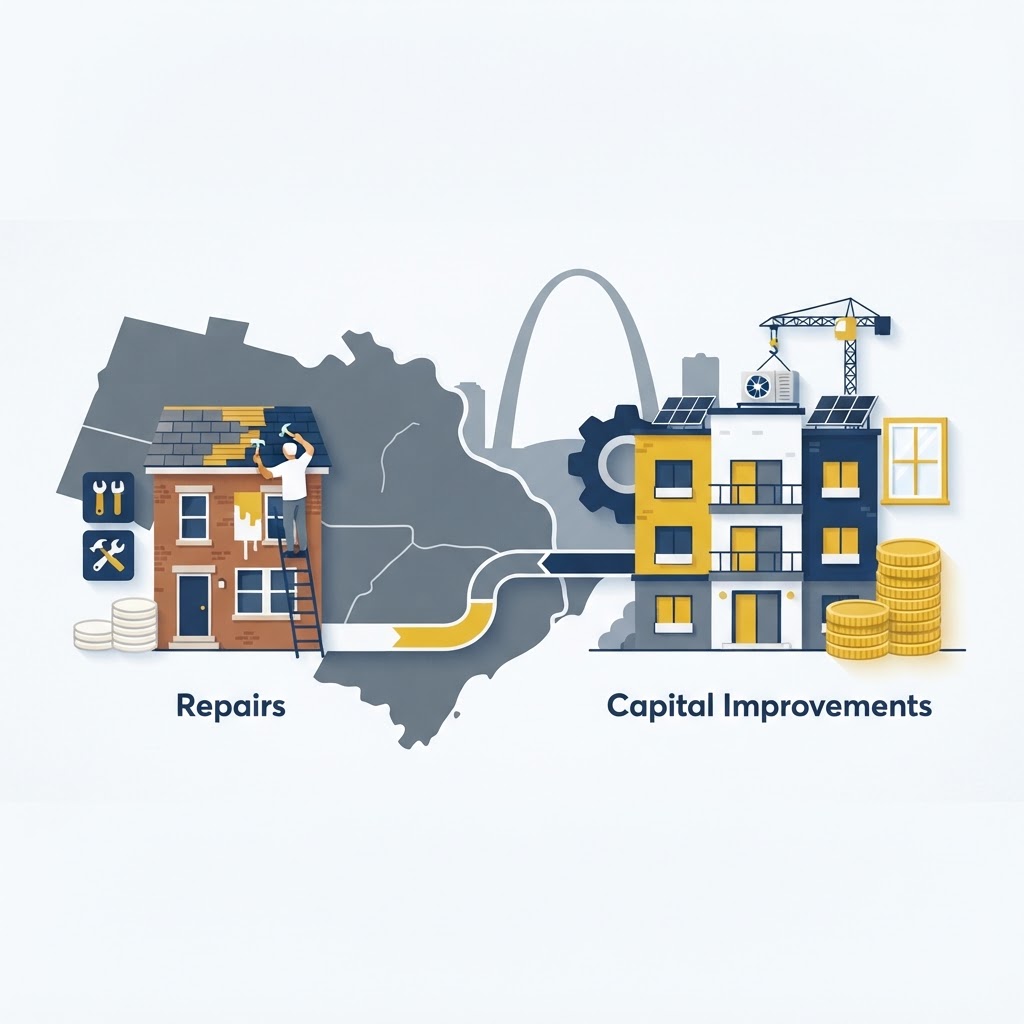
When managing a rental property in St. Louis, understanding the difference between capital expenses and repairs is crucial for both financial planning and tax purposes. With the right knowledge, property owners can make informed decisions that optimize their investment while ensuring compliance with IRS regulations.
What Are Capital Expenses?
Capital expenses, often referred to as CapEx, are substantial investments made to improve or extend the life of a property. These expenses are not regular maintenance costs; instead, they are typically large expenditures that enhance the property's value or adapt it for a different use. In St. Louis, this might include major renovations to a historic home in Lafayette Square or upgrading outdated HVAC systems in a Central West End apartment building.
Capital expenses are generally depreciated over several years. This means that rather than deducting the full amount in the year of the expense, you spread the cost over the useful life of the improvement. For example, if you install a new roof on your rental property, the IRS allows you to depreciate that cost over 27.5 years.
Identifying Repairs
Repairs, in contrast, are costs incurred to maintain the property in its current condition. These are typically smaller, more routine expenses that do not add significant value to the property. Common repairs in the St. Louis area might include fixing a leaky faucet, patching a hole in the wall, or replacing broken window panes.
The key difference is that repairs are generally deductible in the same year they are incurred. This can provide immediate tax relief, which is beneficial for cash flow management. For instance, when a tenant calls about a broken water heater in your Soulard rental property, the cost to fix or replace it would typically qualify as a repair expense.
Tax Implications
Understanding the tax implications of capital expenses versus repairs can significantly impact your financial strategy. The IRS has specific guidelines that dictate how these expenses should be reported and deducted. Misclassifying these expenses can lead to audits and penalties, so it’s essential to maintain accurate records.
For tax purposes, capital expenses must be capitalized and depreciated over time, whereas repairs can be deducted immediately. This distinction not only affects your taxable income but also your long-term financial planning. Consulting with a tax professional who is familiar with Missouri property tax laws can ensure you are maximizing your deductions while staying compliant.
Practical Examples in St. Louis
To further clarify the distinction between capital expenses and repairs, consider these practical examples relevant to St. Louis property owners:
Capital Expense Example: Roof Replacement
Replacing the entire roof of a rental property in Tower Grove is considered a capital expense. This significant investment improves the property and extends its lifespan, thereby requiring depreciation over several years.
Repair Example: Fixing a Roof Leak
On the other hand, patching a small leak in the roof is classified as a repair. This is a maintenance task that keeps the property in good condition without extending its useful life.
Record-Keeping Best Practices
Accurate record-keeping is essential in differentiating between capital expenses and repairs. Detailed documentation will support your tax filings and provide a clear financial picture of your property management activities.
-
Keep Receipts and Invoices: Always keep detailed receipts and invoices for any work done on your properties. This will provide proof of the nature of the work and help in categorizing the expenses correctly.
-
Use Property Management Software: Consider using software to track expenses. Many property management platforms can automatically categorize expenses and generate comprehensive reports, making tax time less stressful.
-
Consult with Experts: Regularly consult with a tax advisor or a property management expert. STL Property Managers can assist in navigating the complexities of managing your rental property’s financials, ensuring you stay compliant and efficient.
Conclusion
Distinguishing between capital expenses and repairs is a fundamental aspect of rental property management that affects both your immediate tax obligations and long-term investment strategy. By accurately categorizing these expenses, St. Louis property owners can optimize their tax benefits and maintain the financial health of their rental properties. For more detailed assistance or if you have specific questions, consider reaching out to the experts at STL Property Managers. Their local expertise and comprehensive services can help you manage your property more effectively and profitably.