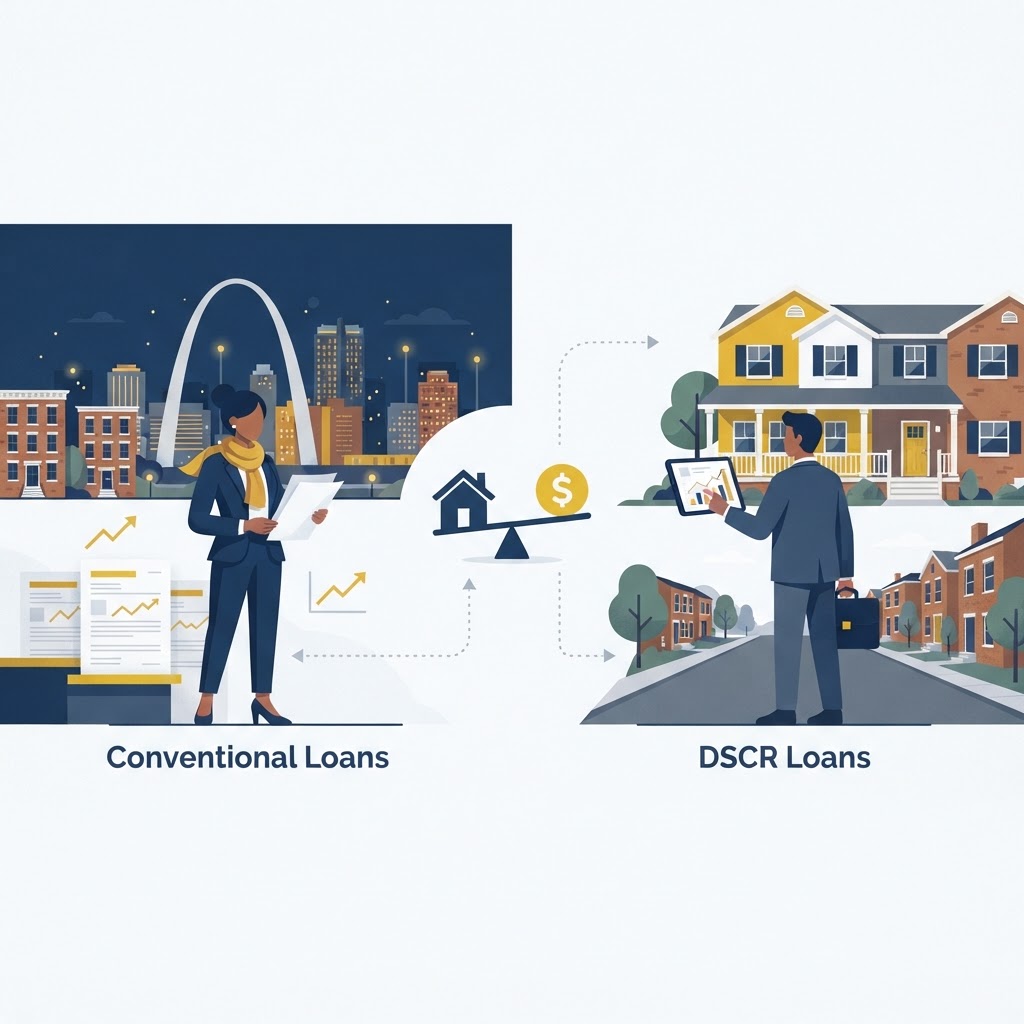
Investing in rental properties in St. Louis can be a lucrative endeavor, but selecting the right type of financing is crucial to maximizing your returns. Two popular financing options are conventional loans and Debt Service Coverage Ratio (DSCR) loans. Each has unique benefits and potential drawbacks, and understanding these can help you make an informed decision.
Understanding Conventional Loans
Conventional loans are the most common type of mortgage used by buyers and investors, characterized by their standard lending criteria. These loans are not insured by the federal government, which often means stricter qualifications but potentially better terms for those who qualify.
Conventional loans typically require a solid credit score, usually above 620, and a down payment ranging from 5% to 20% of the property’s value. This type of loan is attractive due to its competitive interest rates and flexibility in terms. However, the qualification process can be stringent, requiring detailed documentation of income, assets, and employment history.
Benefits of Conventional Loans
- Lower Interest Rates: Conventional loans often come with lower interest rates than other types of financing, which can save you money over the term of the loan.
- Flexible Terms: These loans offer a variety of term lengths, typically between 15 and 30 years, allowing investors to choose a payment plan that fits their financial strategy.
- No Private Mortgage Insurance (PMI): If you can put down 20% or more, you generally won't have to pay PMI, reducing your monthly payments.
What Are DSCR Loans?
The DSCR loan is specifically designed for real estate investors and hinges on the property’s cash flow rather than the borrower’s personal income. This makes it an ideal solution for investors who might not meet the income verification requirements of conventional loans.
DSCR loans assess whether the property’s income will be able to cover its debt obligations. A DSCR of 1 or higher indicates that the property generates enough income to cover its mortgage payment, which is usually a minimum requirement for approval.
Advantages of DSCR Loans
- Easier Qualification: Because DSCR loans focus on property income rather than personal income, they can be easier to qualify for if the property is generating sufficient cash flow.
- Portfolio Growth: This type of loan allows investors to quickly scale their portfolios by leveraging the income generated from existing properties.
- Flexible Use: DSCR loans can be used for a range of investment property types, from single-family homes to multi-unit complexes, making them versatile for various investment strategies.
Comparing Conventional and DSCR Loans
When deciding between a conventional loan and a DSCR loan, consider both your current financial situation and your long-term investment goals. Each loan type has distinct characteristics that could impact your decision.
Key Differences
- Qualification Criteria: Conventional loans rely heavily on personal income and credit history, while DSCR loans focus on property income.
- Down Payment Requirements: Conventional loans often require higher down payments, whereas DSCR loans might offer more flexibility depending on the property's income potential.
- Portfolio Strategy: For investors looking to grow their portfolios quickly, DSCR loans could offer more leverage, while conventional loans might be better for those who prefer stable, long-term investments.
Conclusion
Choosing between a conventional loan and a DSCR loan for your St. Louis investment property depends on your financial profile and investment goals. Conventional loans offer lower interest rates and flexible terms but come with stringent qualification requirements. On the other hand, DSCR loans provide easier qualification through property cash flow but might carry higher interest rates.
For personalized advice tailored to your investment strategy, consider consulting with a local expert. STL Property Managers can provide invaluable insights into the St. Louis real estate market and help you determine the best financing option for your needs. Whether you're expanding your portfolio or making your first investment, understanding the nuances of each loan type is key to making a sound financial decision.
For more detailed information on loan qualifications and investor resources, you might find the Fannie Mae guidelines useful.